
Jones County Parole and Probation
Parole is conditional release from imprisonment after action by the Mississippi State Parole Board. Probation comes from a judge and may take the place of incarceration, so a probation record does not by itself prove that the person left prison. Earned-release supervision, often shown as ERS, permits an eligible person to live in the community while retaining inmate status under MDOC. Post-release supervision is a term imposed in the sentence. All four may place a person under community rules, but each begins through a different legal route.
The distinction changes how Jones County records should be read. A match in the MDOC parolee search supports current parole supervision. It does not give the exact time the person walked out of Jones County Adult Detention Facility. A probation order is best verified in the court case. ERS may appear as a community location on the MDOC inmate detail. Full discharge is stronger when shown by a discharge certificate or official state release record.
| Status | Who authorizes it | Best public verification path |
|---|---|---|
| Parole | Mississippi State Parole Board | MDOC parolee search, Board action, and MDOC confirmation |
| Probation | Sentencing court | Judgment or probation order, then local MDOC Community Corrections |
| ERS | MDOC under state law | MDOC inmate detail, location data, and official MDOC record |
| Post-release supervision | Sentencing court | Sentence and later supervision or discharge record |
- Supervision
- Community status subject to legal conditions and oversight.
- Discharge
- The official end of the applicable sentence or supervision term.
- Absconder
- A supervision status reporting loss of required contact, not a new conviction by itself.
- Revocation
- An official action that can return a person to custody after a violation finding.
Verify Jones County Post-Release Supervision
Start with identity, not assumptions. Gather the exact name and MDOC ID when lawfully available. Add the city or county only to narrow a crowded result list. Compare the MDOC record with the sentence because a same-name hit can be wrong and each supervision class means something different. The public tools are useful entry points, while the agency holding the record gives the current answer.
- Search the official MDOC parolee database by exact name or MDOC ID. Add Laurel or Jones County only when it helps separate matches.
- Compare the MDOC ID and identity details with the inmate detail and the court case. Do not rely on the name alone.
- Read the supervision class carefully. A parolee match supports parole, but probation or ERS may require the court judgment, inmate detail, or local office.
- Contact the Jones Probation & Parole Office with public identifiers when the search is unclear or an office assignment needs confirmation.
- For completed supervision, request the official discharge or termination record from the court or MDOC custodian that created it.
The manifest image below comes from the official MDOC parolee search and shows the public starting form.
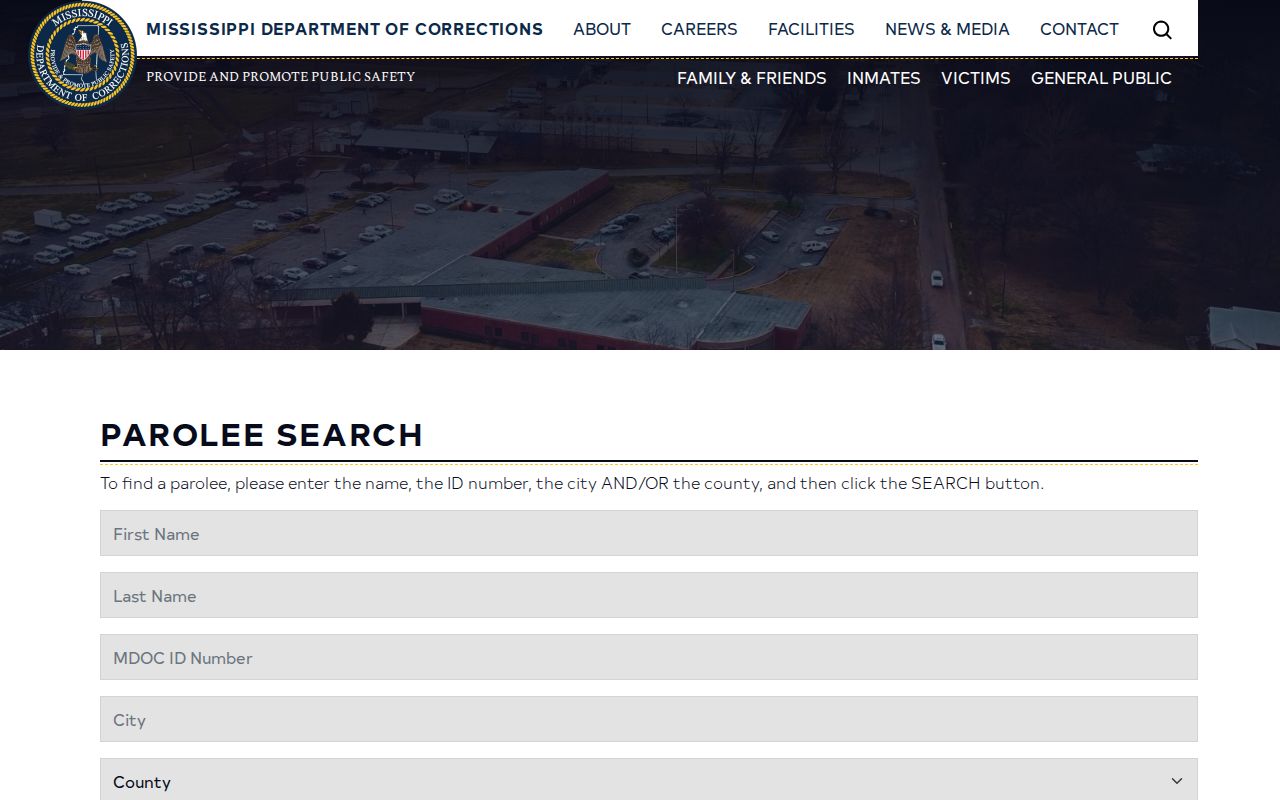
Its name, MDOC ID, city, and county inputs help narrow a parole inquiry, but a match still needs identity and status confirmation.
Important: A supervision match shows community oversight. It does not establish a Jones County jail release time or complete sentence discharge.
Jones County Parolee Search Fields
The parolee search covers a person specifically reported in the MDOC parole system. It should not be stretched to cover every type of community status. A negative result may reflect completed parole, probation, ERS, interstate supervision, return to custody, a spelling mismatch, or a record that needs agency review. None of those outcomes can be chosen from a blank result alone.
| First and last name | Search terms for a person when an MDOC ID is not known; confirm all matching identifiers. |
|---|---|
| MDOC ID | The strongest public search input for separating people with similar names. |
| City | A narrowing field, not proof that a particular office supervises the person. |
| County | Can narrow toward Jones County, but current assignment should still be confirmed. |
When the issue is a sentence rather than parole, inspect the operative judgment. A later amended order or revocation may supersede an earlier term. The MDOC inmate detail can also identify a community location such as ERS. The broader Jones County released-inmate search and records path explains how a county release timestamp, court order, and state record answer separate parts of the custody history.
Note: A negative parolee-search result is unresolved evidence, not proof that supervision ended or that the person was never supervised.
Jones County Supervision Office Details
MDOC maintains a dedicated Community Corrections office in Laurel. This is the local human route after the public search, especially when a likely match does not make the supervision class or Jones office assignment clear. The office is not a jail. Contact should stay focused on public status and the record that supports it, not private reporting schedules, residence information, family contacts, treatment, or case-plan details.
Jones Probation & Parole Office
1117 West 6th Street
Laurel, MS 39440
601-649-4181
Fax: 601-649-6459
No public walk-in hours or Jones County check-in protocol was found. Call before visiting. A sound question asks whether the public record indicates supervision through this office and which official record confirms the class or status.
The official Jones Probation & Parole Office page is also the source for the local contact shown here.
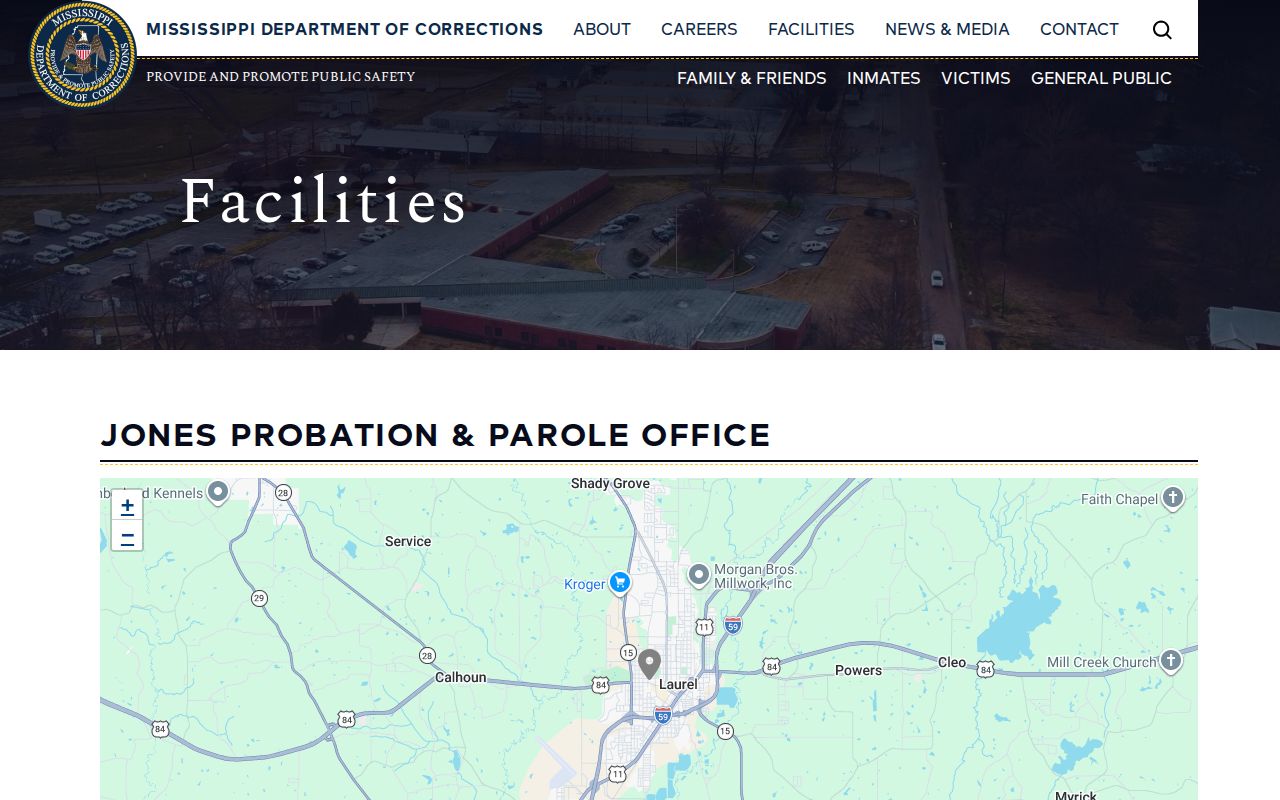
The image anchors the office name and published contact route without implying unlisted hours or public access to a private supervision plan.
Jones County Warrants and Absconders
The Jones County Sheriff publishes Current Justice Court Warrants. That official local list can explain why someone outside the jail is still wanted on a Jones County matter. It is not an MDOC absconder database, and it does not prove that the person is on parole or probation. A warrant can exist without any state community supervision.
Abscond status answers a different question. It means the supervising agency reports a loss of required contact or noncompliance. It does not itself prove a new crime or conviction. Likewise, a VINE abscond alert reflects a reported status event rather than the full revocation record. Confirm the event with the issuing or supervising authority and check the court record for any later warrant, hearing, or revocation order.
Conditions and alleged violations are case-specific. Common categories can involve reporting, travel permission, payment duties, or conduct requirements, but the actual judgment and supervision record control. Do not infer a term from another person's case. When public sources disagree, note their dates and ask the agency with the operative record.
The MDOC types of supervision source also distinguishes parole, probation, ERS, and intensive supervision. That official vocabulary helps prevent a loose claim that every person seen outside a facility has been fully discharged. It also helps explain why one public search may not return all classes. Match the class to the source that creates it, then ask for the present status rather than private compliance details.
Note: The sheriff warrant page and an MDOC supervision record serve different systems, even when both concern the same person.
Jones County Parole Hearing Records
The Mississippi State Parole Board conducts parole consideration, yet the official public pages did not reveal a person-by-person hearing calendar or a searchable decisions-and-results database. That negative finding matters. The parolee search must not be presented as a hearing calendar, and an inmate location must not be presented as a Board decision. Official Parole Board administrative rules describe case-specific scheduling, notice, communication of decisions, and an official-action minute book.
For a specific action, contact the Mississippi State Parole Board or request the applicable official action or minute with the person's name, MDOC ID, and a focused date range. The Board contact listing gives 239 North Lamar Street, Suite 501, Jackson, MS 39202, 601-576-3520, and MSStateParoleBoard@mdoc.state.ms.us. Production remains subject to applicable confidentiality limits.
Use the precise outcome in the actual record. A matter may be granted, denied, deferred, rescinded, or revoked, but a label should never be guessed. A grant is not proof of physical release. Plan approval, processing, detainers, or another custodian may intervene. Eligibility under Mississippi Code § 47-7-3 depends on the offense, date, sentence, and exclusions, so MDOC and the Board should calculate it for the individual record.
When Jones County Supervision Ends
Physical release and the end of supervision are separate events. A parolee may remain under conditions until discharge. An ERS participant remains an inmate for statutory purposes until sentence expiration. A person serving post-release supervision remains bound by the judgment, while a probationer may have begun community supervision without ever leaving prison. The official end should come from the agency or court responsible for that term.
Ask for a discharge certificate, termination order, or other official record that identifies the status and effective date. If an expected end date appears to have passed, do not treat the calendar alone as proof. A revocation, amended judgment, new sentence, interstate transfer, or administrative correction can change the record. The Jones County inmate release date page separates MDOC's tentative date from an actual release or discharge event.
Mississippi VINE can report custody and supervision changes supplied by participating agencies, but it is not the final judgment. Court records explain the sentence. MDOC records explain state custody and supervision. The Jones office helps resolve the local assignment. Read together, these channels can support a clear conclusion: current supervision, completed discharge, return to custody, or still unresolved.
If the public result no longer appears, use a focused record request. Give the exact name, MDOC ID, supervision class if known, and a useful date range. Ask for the public record showing termination, discharge, revocation, or transfer of supervision. A no-record response should be saved with its scope and date, but it is not proof that supervision ended. Ask whether another court, interstate authority, or MDOC unit holds the operative record.